2026 edition
Staying on track: shippers and carriers, building continuity under constraints
Transportation has entered a period of sustained turbulence. Rising costs, regulatory pressure, driver shortages, weakened players, and increased environmental requirements: transportation managers now operate in an environment where the slightest disruption can throw the entire value chain into disarray. In this new unstable equilibrium, the priority is no longer to optimize margins, but to maintain sustainability over the long term.
Staying on track means guaranteeing service continuity, securing capacity, and controlling costs, while integrating environmental progress trajectories that are compatible with the economic realities on the ground. But this solidity can no longer be achieved individually.
Faced with the complexity of flows and pressure on margins, continuity becomes a shared objective. Transport performance now depends on the quality of the relationship between shippers and carriers: mutual visibility, clear commitments, transparency on constraints, and cooperation in times of tension. It is no longer a game of shipper against carrier. It is shipper and carrier facing market constraints.
In Saint-Malo, Top Transport brings together those who choose to make this cooperation a lever for strength and sustainable performance.
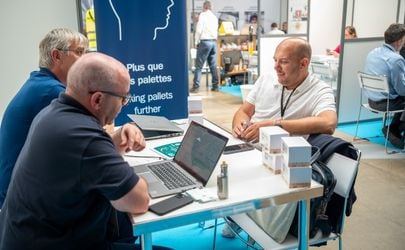

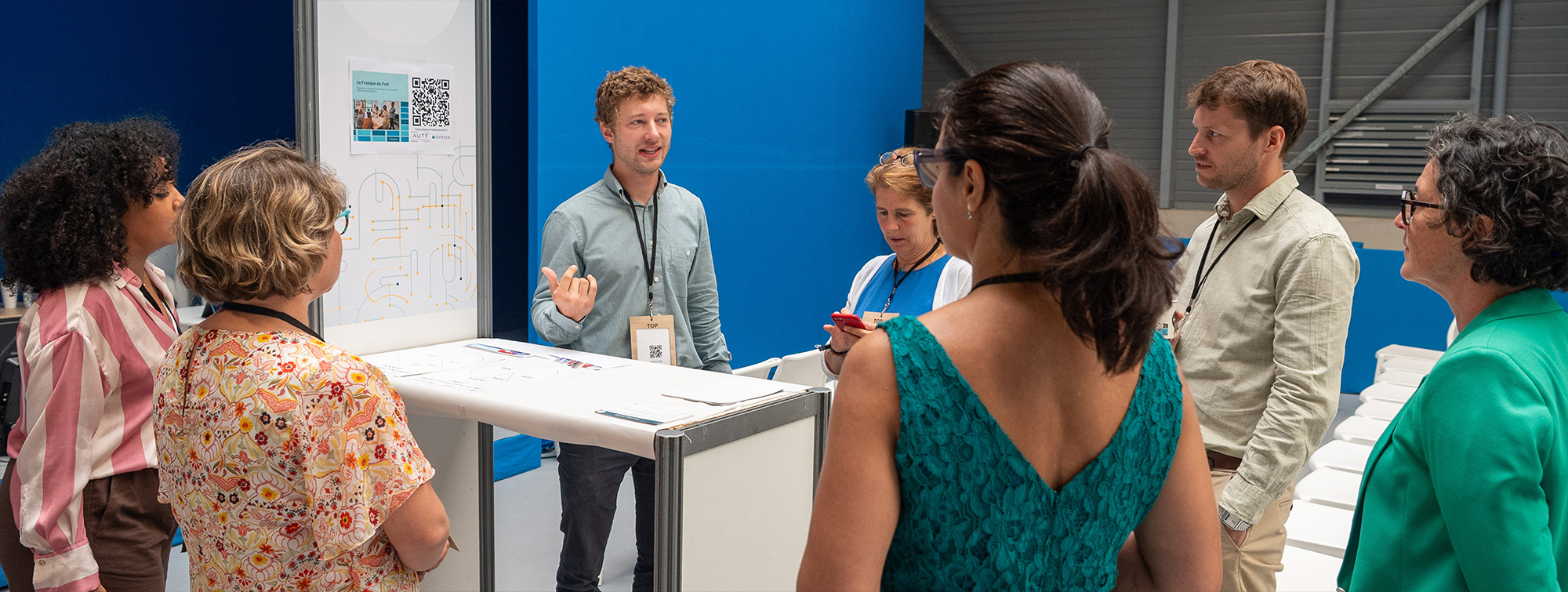
‘Shippers’ Perception Barometers 2026’ – AUTF: Results and analysis of road transport trends
For over ten years, the AUTF and Eurogroup Consulting have been surveying shippers – those who commission transport services – to examine their perceptions and expectations across all modes of transport – road, rail, inland waterways, combined transport and maritime – as well as in relation to customs.
The ‘Shippers’ Perception Barometer – Road Transport’ provides an overview of the past year, puts key issues into perspective and takes the pulse of shippers, thereby setting out their vision of a sector undergoing rapid change, facing major challenges but also offering significant opportunities.
Featuring:
- Valérie CORNET AMBROISE, Land Transport Representative at the AUTF
- Denis MONCUIT, Transport Director at the POMONA Group and Chair of the AUTF’s Own-Account Transport Committee
- Marc LACHAIZE, Market Logistics Manager for France, Spain and Portugal at VELUX France

Jules Verne is back to judge your transport choices & Truckly, the the first truckpooling app
Transalliance's workshop - Carbon-neutral transport: what practical solutions are available for shippers and supply chain managers?
With Jean-Baptiste AVRIL, Head of Development at TRANSALLIANCE, and Chloé GUEDJ, Logistics Procurement Sustainability Buyer at PEPSICO
Drawing on the lessons learnt from a successful partnership, this workshop will analyse the operational, organisational and decision-making challenges associated with decarbonising transport. The example of integrating 100% electric vehicles will illustrate how to manage a multi-stakeholder project and the key issues that shippers must address prior to deployment. A practical approach to situating this solution within a broader discussion on transport decarbonisation pathways.
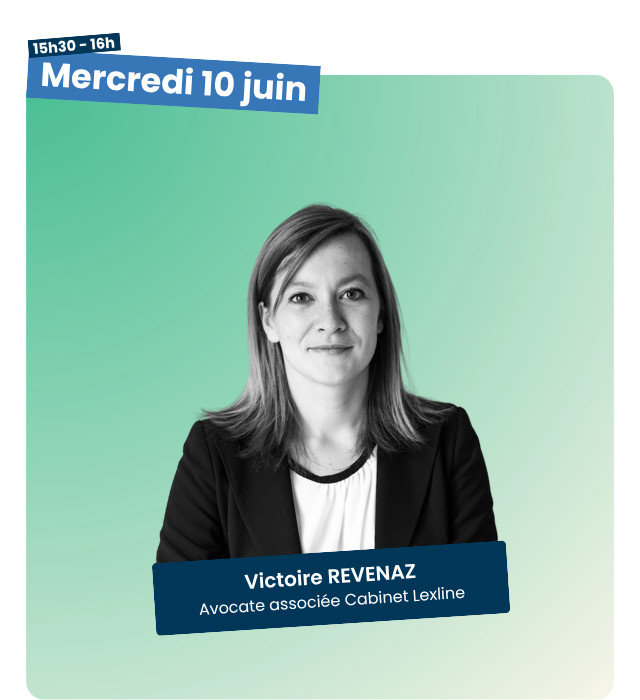
How is the right of retention exercised in relation to goods?
Hosted by Victoire Revenaz, Partner at Lexline
When faced with the risk of non-payment, the right of retention is one of the most powerful tools available to a carrier in relation to its client. However, it must be used wisely: if exercised incorrectly, it can backfire on the party invoking it. This workshop will help you master all aspects of this right: the conditions for exercising it, its scope of application to goods, the obligations incumbent on the carrier, and the means of challenge available to the shipper. We will also address the specific features of the CMR regime, as well as the implications of insolvency proceedings on the exercise of this right.
Beyond technology: understanding transport data to improve performance
Long considered to be lagging behind in the digitalisation of its operations, the transport sector has now moved into a whole new league. From concept to reality, many players have taken the leap into the digital realm through innovative tools, from TMS to AI-powered platforms. Whilst the technologies are now accessible, the key issue of data remains. Its collection, analysis and optimisation remain a complex challenge, yet one that is essential to their performance. Feedback from a shipper and its specialist software partner.
With:
- Philippe GRUSON, Supply Chain Director – Irripiscine by Irrijardin
- Jérôme JENNEPIN, Software Sales Engineer – Savoye
Contract management during geopolitical conflicts
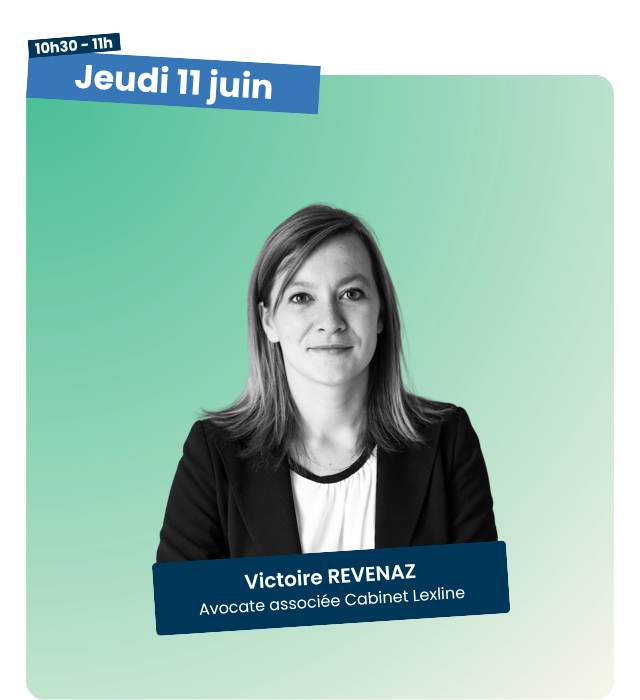
Hosted by Victoire Revenaz, Associate Lawyer at Lexline
Geopolitical conflicts – such as war, the closure of straits and international sanctions – have a knock-on effect on the supply chain. How does the transport contract adapt to these disruptions? This workshop will address the practical issues raised by these crises: can the carrier invoke force majeure? Which clauses should be invoked? Who bears the additional costs incurred (storage, demurrage, re-routing, etc.)? Does the delay give rise to a right to compensation? What insurance could be utilised? And what contractual procedures and protocols should be put in place to minimise these risks?
.png?rev=7024ce4a7e0a4c80a7521defcc74bccc&w=640&hash=2307DFC0A8746DDA6F8F6852855E8417)
ETS2, road transport and CSR: an imposed constraint or a collaborative transformation?
From 2028, the expansion of the European carbon market (ETS2) will introduce a direct cost on fossil fuels in road transport. Without shared measurement tools, there is a high risk of seeing flat-rate surcharges emerge that are disconnected from actual emissions — replicating the tensions already observed in the maritime sector. The key question: will this cost be borne passively, or will it become a lever for concerted transformation?
With:
- Thierry AMBROISE, CEO - AMBROISE BOUVIER Group
- Jérôme PLA, Chairman of Transport - VINGEANNE & Vice-Chairman - ASTRE France
- Guillaume BROHAN, Suplly Chain Manager - LOBODIS
.png?rev=813f11ecbdb14520917360e856a7ccde&w=640&hash=E3B237253D025D91B69F161AACADEFC6)
Electrifying a transport route: perspectives from the carrier, the client and the charging provider with Volvo Trucks
In the face of the challenges posed by decarbonisation, the electrification of road freight transport is now an operational and economic reality and a topic that is more relevant than ever. This round table offers practical insights, drawing on the entire decision-making chain.
Volvo Trucks, a manufacturer with over five years’ experience in electric solutions, will share its expertise in products and services. Ambroise Bouvier, a haulier and pioneer in electrification, will share his two years’ experience in electric transport, including on-the-ground implementation and the impact on his operations. His client, Renault Group, will explain its leading role in the energy transition of transport flows. Finally, the charging solutions partner will shed light on the infrastructure required for the success of these projects.
With:
- Jérôme Flassayer, Director of Electromobility and Alternative Energies at Volvo Trucks France, will share the vision of Europe’s first heavy goods vehicle manufacturer to have electrified its entire range.
- Thierry Ambroise, Managing Director of Ambroise Bouvier Transports (haulier)
- Florence Ughetto, Sustainable Logistics Expert in the Renault Group supply chain (client)
- Emeric de Bodinat, Chief Executive Officer of Autorecharge (charging partner of Volvo Trucks)
.png?rev=cb087d49e4c94088a6fa089e0c670dae&w=640&hash=F2EED5FC69F8502C06B745A7FBB704B5)
When the supply chain becomes a tool for solidarity: a focus on food banks
For over 40 years, Food Banks have relied on the expertise of supply chain stakeholders to collect and purchase nearly 128,000 tonnes of food. This represents 228 million meals distributed to 2.4 million people facing food insecurity. This conference aims to explore practical ways of partnering to strengthen these synergies of solidarity, tackle food insecurity and combat food waste in a sustainable manner.
With Philippe Labedan and Jean-Paul Meyronneinc, members of the FFBA Transport Committee and, respectively, chairmen of the Basque Country and Somme Food Banks.
